
Introduction
Standing desks are becoming increasingly popular — and for good reason. They can improve posture, reduce back pain, and encourage movement throughout the day. But if you’ve tried one, you may have noticed your feet or legs aching after standing for a while. That’s where anti-fatigue mats often get recommended.
So, what exactly are they? Do they actually work? And are they worth adding to your standing desk setup?
As a physiotherapist, I get asked this all the time. In this blog, I’ll explain what the research says, when these mats are genuinely useful, and when they might not make much difference — plus how to stand safely and comfortably at your desk.
What Are Anti-Fatigue Mats?
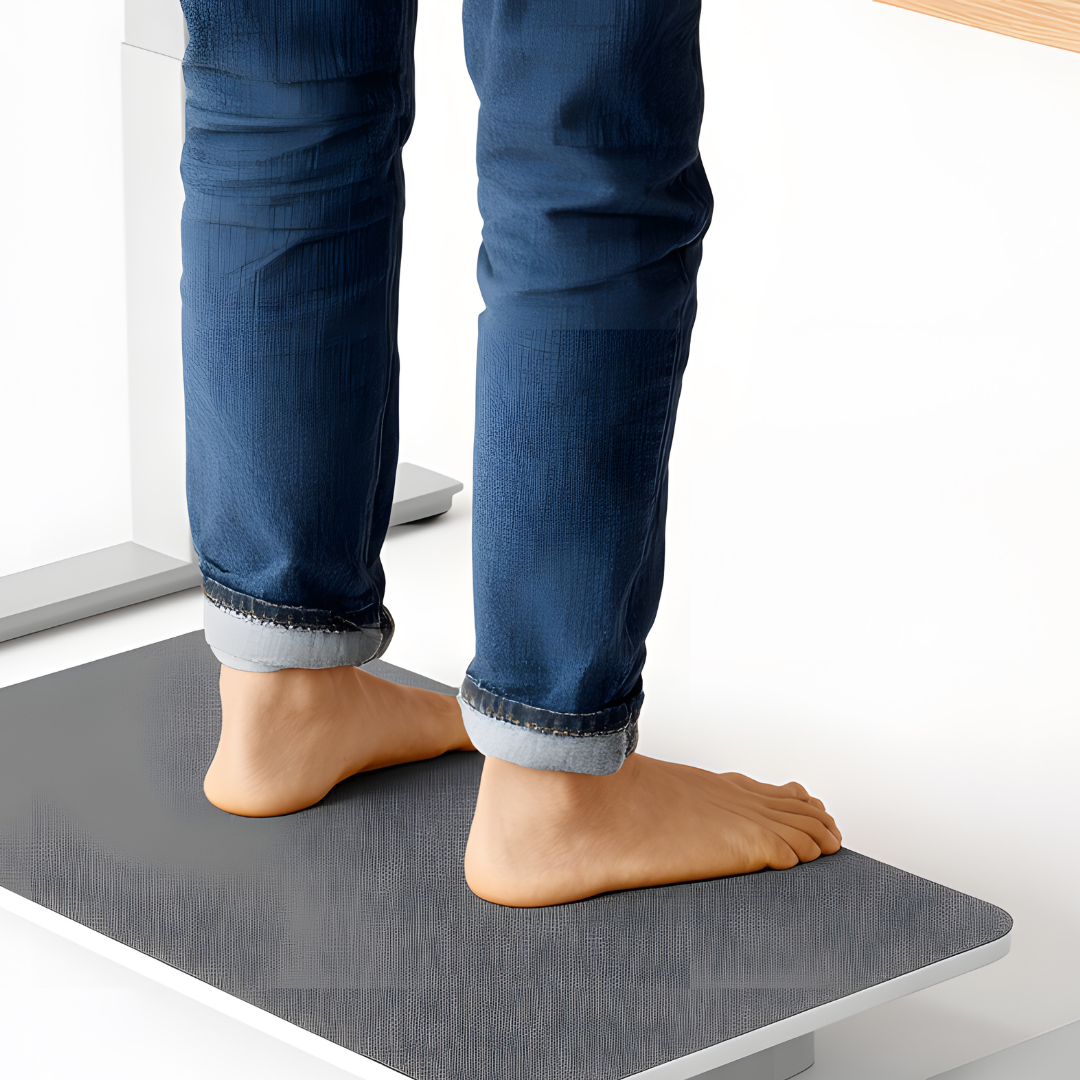
Anti-fatigue mats are cushioned floor mats designed to reduce the discomfort that comes from standing on hard surfaces for long periods. You’ll find them used by hairdressers, chefs, and now increasingly by people with standing desks.
They work by adding a slight “give” under your feet, encouraging tiny movements in your ankles and calves. These micro-adjustments help improve circulation, reduce joint pressure, and delay the onset of fatigue.
The Physiotherapist’s Perspective
Standing desks can be great for posture if you stand well. But if your alignment, core strength, or hip stability are poor, prolonged standing can actually increase strain on your lower back, hips, and feet.
That’s why I see anti-fatigue mats as a useful aid, not a fix. They can reduce discomfort — but only if combined with:
- Good posture
- Active core engagement
- Regular movement and position changes
If you’re arching your back, leaning heavily on one hip, or not correctly activating your knees even the best mat in the world won’t protect you from pain.
What the Research Says
Research into anti-fatigue mats is surprisingly solid. Several studies have found they can reduce discomfort and fatigue, especially in people who stand for long periods or who are prone to back pain.
- A 2013 study found people standing for four hours experienced less discomfort and more movement when using an anti-fatigue mat compared to a hard floor.
- Another study (2021) showed that people who typically develop back pain when standing (“pain developers”) experienced less low back pain when using a mat.
- A 2023 review of cushioned flooring concluded there’s moderate evidence that anti-fatigue mats reduce perceived fatigue and improve comfort.
In short: the evidence supports their use — but with a clear caveat. They help most when you already have good posture and movement habits.
How to Stand Well at Your Desk
Before investing in a mat, check your standing posture first. Here’s what I recommend to my patients:
- Feet – hip-width apart, toes facing forward, weight evenly balanced.
- Knees – straight but not locked.
- Pelvis – neutral, not tilted forward or back.
- Core – gently drawn in to support your spine.
- Chest – lifted not dropped.
- Shoulders – relaxed, not rounded forward.
- Monitor – at eye level so your head stays in line with your body.
If you’re unsure whether you’re standing correctly or engaging your core effectively, I strongly recommend my Free Posture Masterclass. It includes a simple self-assessment and step-by-step guidance to help you stand well, whether at your desk or on your feet.
Join the Free Posture Masterclass here
How to Choose the Right Anti-Fatigue Mat
If you decide to try one, here’s what to look for:
- Firm but supportive: Too soft and you’ll sink, too firm and you lose the benefit.
- Beveled edges: Prevent tripping and curling.
- Non-slip surface: Essential for safety.
- Enough space: Choose a mat large enough to shift your weight and move comfortably.
Best Anti-Fatigue Mats for Standing Desks (2025 Picks)
These options are consistently rated highly and suit different preferences and budgets:
- FLEXISPOT Standing Desk Anti-Fatigue Mat – A 2 cm thick, high-density foam mat that provides excellent cushioning and postural support, helping reduce back and leg fatigue during long periods of standing.
- Ceciliec Anti-Fatigue Standing Mat – A cushioned, non-slip PU foam mat that absorbs shock and eases pressure on your legs and back, offering reliable comfort for standing desks, kitchens, or workspaces.
- SoftDuo Anti-Fatigue Floor Mat Set – A durable, waterproof pair of cushioned PVC mats designed to reduce back and leg fatigue, improve posture, and provide stable, non-slip comfort for standing desks or home workspaces.
Just so you know: If you choose to make a purchase, I may earn a small commission — at no extra cost to you. It helps support the work I do to help people like you feel better, move better, and stay active. Thank you!
Next Steps
These blogs might be useful to you.
The Complete Guide to Standing Desks: Are They Right for You?
How to Choose the Perfect Standing Desk for Your Workspace
Using a Standing Desk Safely and Effectively: Expert Tips for Comfort and Productivity
Final Thoughts
Anti-fatigue mats can be a simple and effective way to reduce fatigue and discomfort when using a standing desk — especially if you’re on your feet for long periods. But remember, they’re just one part of the picture.
If your posture or core strength isn’t quite where it should be, even the best mat won’t fix that — and that’s where physiotherapy-based guidance makes all the difference.
Before you spend money on a mat, take a few minutes to ensure your foundation is right: Join my Free Posture Masterclass and learn how to stand well, engage your core, and make your standing desk work for your body — not against it.
Take care, Helen
Helen Manders BSc (Hons) MCSP HCPC
Chartered Physiotherapist Since 2001
Always here if you need. Click here to learn how I can support you.