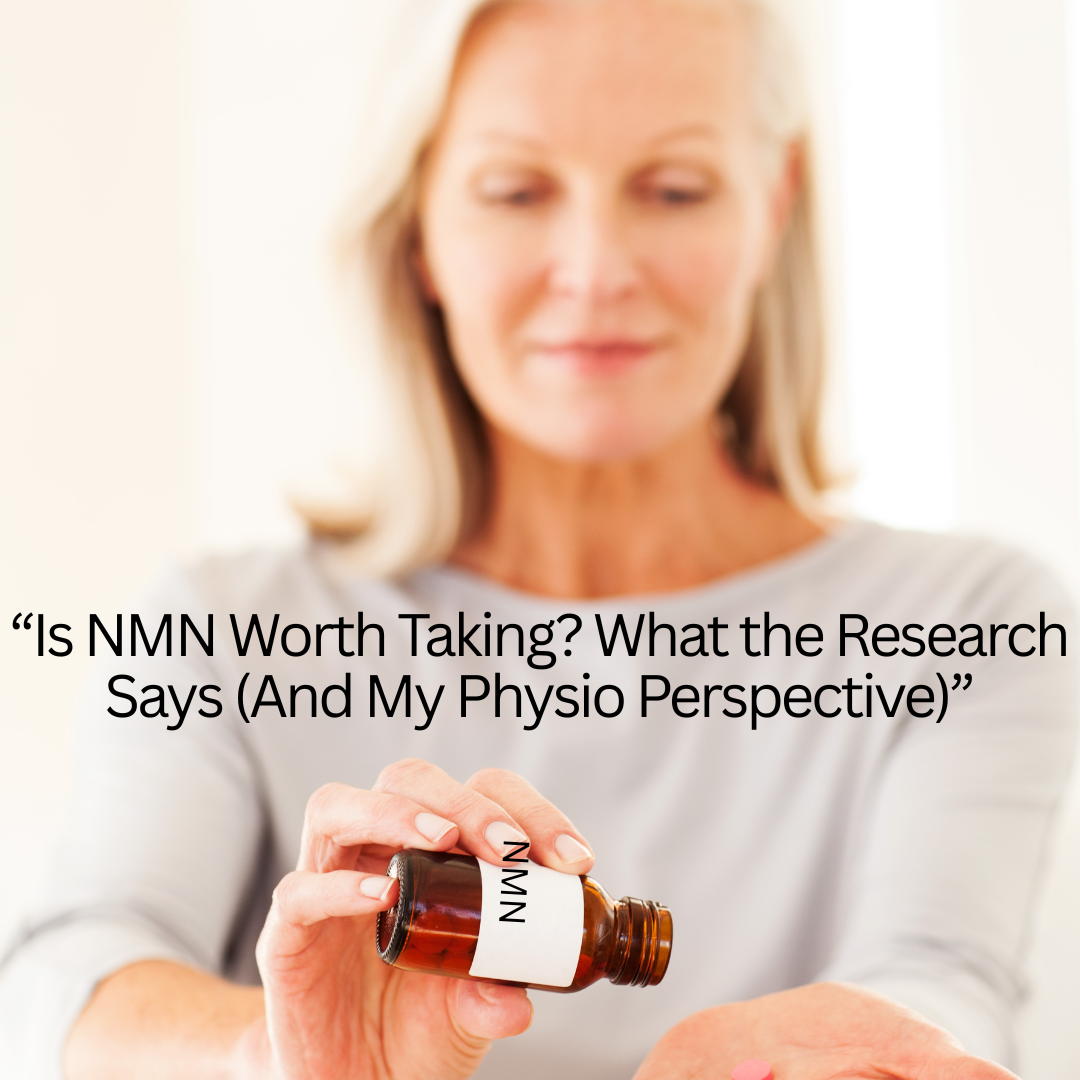
Over the last year or two, more and more people have started asking me about NMN.
Usually, it comes up after someone notices they don’t quite feel the same physically as they used to. Recovery from exercise seems slower. Energy dips appear more often. Joints feel stiffer. Or they simply want to stay active and healthy as they get older.
At the same time, podcasts, health experts and social media have helped push “longevity supplements” into the mainstream – with NMN becoming one of the most talked-about options.
So naturally, people want to know:
Is NMN actually worth taking?
As a physiotherapist, I always think it’s important to approach supplements with a balanced mindset. I’m interested in anything that may genuinely support healthy ageing and recovery – but I’m also cautious of exaggerated claims and miracle promises.
So in this article, I wanted to look at:
- What NMN actually is
- Why people are taking it
- What the current research says
- What we still don’t know
- And where I personally think it fits into the bigger picture of healthy ageing
What Is NMN?
NMN stands for nicotinamide mononucleotide.
It’s a compound involved in the production of something called NAD+ (nicotinamide adenine dinucleotide), which plays an important role in cellular energy production and repair.
NAD+ helps support processes linked to:
- Energy metabolism
- Mitochondrial function
- Cellular repair
- Muscle function
- Healthy ageing
One reason NMN has gained attention is because NAD+ levels appear to decline as we age.
Researchers have been exploring whether increasing NMN levels could potentially help support healthier ageing and physical function.
That sounds promising.
But it’s important to separate:
- exciting theories
from - strong evidence in humans.
And that’s where things become a little more nuanced.
Why Are People Taking NMN?
People are generally taking NMN in the hope it may help support:
- Energy levels
- Recovery from exercise
- Healthy ageing
- Muscle function
- Metabolic health
- Cognitive function
- Cellular health
For many people, the appeal is less about trying to “reverse ageing” and more about wanting to stay active, independent and physically capable for longer.
That’s something I completely understand.
One of the biggest things I see clinically is that many people simply want to keep doing the activities they enjoy:
- walking comfortably
- gardening
- exercising
- travelling
- playing sport
- keeping up with family life
The desire to age well physically is very real.
What Does the Research Actually Say?
This is where things get interesting.
There is some encouraging early research around NMN.
But it’s also important to say clearly:
The human evidence is still relatively early and limited.
A lot of the excitement around NMN originally came from animal studies.
Some of these studies suggested potential benefits relating to:
- Energy metabolism
- Insulin sensitivity
- Endurance
- Mitochondrial function
- Cellular ageing processes
More recently, small human studies have started emerging.
Some have shown possible improvements in areas such as:
- Muscle insulin sensitivity
- Aerobic capacity
- Fatigue perception
- Certain metabolic markers
However, there are still important limitations.
Many studies are:
- small
- short-term
- focused on surrogate markers rather than long-term outcomes
- funded within the supplement space
And importantly:
We still do not have strong long-term evidence showing that NMN dramatically changes health outcomes, prevents disease or significantly slows ageing in humans.
That doesn’t mean it’s useless.
It simply means the science is still evolving.
What We Know – And What We Still Don’t Know About NMN
What seems reasonably promising so far
Current research suggests NMN may potentially support:
- Cellular energy production
- Mitochondrial function
- Metabolic health
- Exercise capacity in some individuals
- Healthy ageing pathways
Many people who take NMN also report subjective improvements in:
- energy
- motivation
- recovery
- exercise tolerance
Although personal experiences can vary significantly.
What we still don’t know
This part matters.
At the moment, we still do not fully know:
- the ideal dosing strategies
- long-term safety over many years
- who benefits most
- whether benefits are meaningful in healthy adults
- whether NMN outperforms simpler lifestyle interventions
And I think this is where people need realistic expectations.
NMN is not a substitute for:
- exercise
- sleep
- strength training
- nutrition
- stress management
- maintaining a healthy body composition
No supplement currently replaces those foundations.
My Physio Perspective on NMN
From a physiotherapy perspective, the people who tend to age best physically are rarely relying on supplements alone.
The strongest predictors of healthy physical ageing are still things like:
- regular movement
- strength training
- maintaining muscle mass
- walking consistently
- good sleep
- staying socially and mentally engaged
- managing stress
- keeping body weight in a healthy range
Those things matter enormously.
That said, I also think it’s reasonable for people to be curious about supplements that may potentially support energy, recovery and healthy ageing.
Personally, I see NMN as:
- interesting
- potentially promising
- worthy of further research
…but not something I would currently describe as a miracle supplement.
If someone is already exercising well, sleeping reasonably, eating well and looking after their health overall, then NMN may be something they choose to explore.
But I would avoid viewing it as the missing piece that suddenly fixes low energy, poor fitness or physical decline.
Could NMN Help Joint Pain or Arthritis?
This is another area people often ask about.
At the moment, there is no strong evidence showing that NMN directly treats arthritis or significantly reduces joint pain.
However, researchers are interested in whether cellular energy and inflammatory pathways linked to ageing may indirectly influence musculoskeletal health.
Some people speculate that improving mitochondrial function and cellular repair processes could potentially support healthier ageing tissues.
But right now, that remains more theoretical than proven.
For joint pain and arthritis specifically, the strongest evidence still supports:
- appropriate exercise
- strengthening
- maintaining mobility
- weight management where appropriate
- pacing activity well
- improving overall physical health
As a physio, those remain the foundations I would prioritise first.
This online program looks at all of these areas to UPGRADE your Arthritic Knee it is evidence and researched backed. Take a look I would love to see you there.
Should You Try NMN?
There probably isn’t a universal yes-or-no answer.
Some people may decide it’s worth experimenting with.
Others may prefer to wait for stronger long-term evidence.
People who might consider it
Potentially:
- active adults interested in healthy ageing
- people focused on recovery and exercise capacity
- adults noticing declining energy with age
- individuals already prioritising good lifestyle habits
People who should be cautious
It’s always sensible to speak with a healthcare professional before starting supplements — particularly if you:
- take regular medication
- have significant medical conditions
- are pregnant or breastfeeding
- have concerns around interactions or safety
And again, I would be cautious of anyone making dramatic promises about anti-ageing effects.
The current evidence simply does not support miracle claims.
If You Do Decide To Try NMN
“If you decide to experiment with NMN, I’d strongly encourage choosing a reputable company with transparent ingredient sourcing and third-party testing where possible.
Quality appears to vary significantly between supplements, and at the moment there is still limited long-term research around many products on the market.
Personally, I think it’s sensible to approach NMN with curiosity and realistic expectations rather than viewing it as a miracle anti-ageing solution.”
As always, supplements should ideally sit alongside:
- good sleep
- regular exercise
- strength work
- healthy nutrition
- stress management
- consistent movement
Those are still the real foundations of ageing well physically.
Supplements Aside, Here’s What I’d Focus On First
While supplements like NMN are interesting, I still believe the biggest drivers of healthy physical ageing are things like:
- strength
- mobility
- balance
- walking capacity
- recovery
- muscle mass
- movement habits
Those are the things that often determine how well we continue doing the activities we love later in life.
That’s one reason I created my Strong For Life Assessment.
It’s designed to help people understand how their body is functioning now – and identify areas that may help support a stronger, healthier and more capable future self.
Rather than chasing quick fixes, the goal is to focus on the foundations that genuinely matter for long-term physical health and independence.
Final Thoughts
NMN is certainly one of the more interesting supplements currently being explored in the healthy ageing space.
There is some genuinely promising early research.
But there’s also still a lot we do not yet know.
My view at the moment is that NMN may potentially offer support for some people — particularly around energy metabolism and healthy ageing pathways — but expectations should remain realistic.
I wouldn’t see it as a shortcut.
The people who tend to feel and function best physically over time are usually the ones consistently investing in the basics:
- movement
- strength
- recovery
- sleep
- nutrition
- physical activity
Those things still matter most.
And if a carefully chosen supplement helps support that bigger picture for someone, then it may well have a place.
Take care, Helen
Helen Manders BSc (Hons) MCSP HCPC
Chartered Physiotherapist Since 2001
You May Also Find Helpful:
- Magnesium, Collagen and Turmeric, whats hype Vs helpful for joint pain.
- Should I ache this much after exercise? My guide to DOMS
- What Role Does Weight Management Play in Reducing Knee Arthritis Symptoms?
- Top 10 Tips for Managing Chronic Pain Naturally
- Oxidative Stress and Antioxidants: How They Affect Your Health, Ageing and Recovery
- Do Supplements Really Help Arthritis? What Works & What’s a Waste of Money