
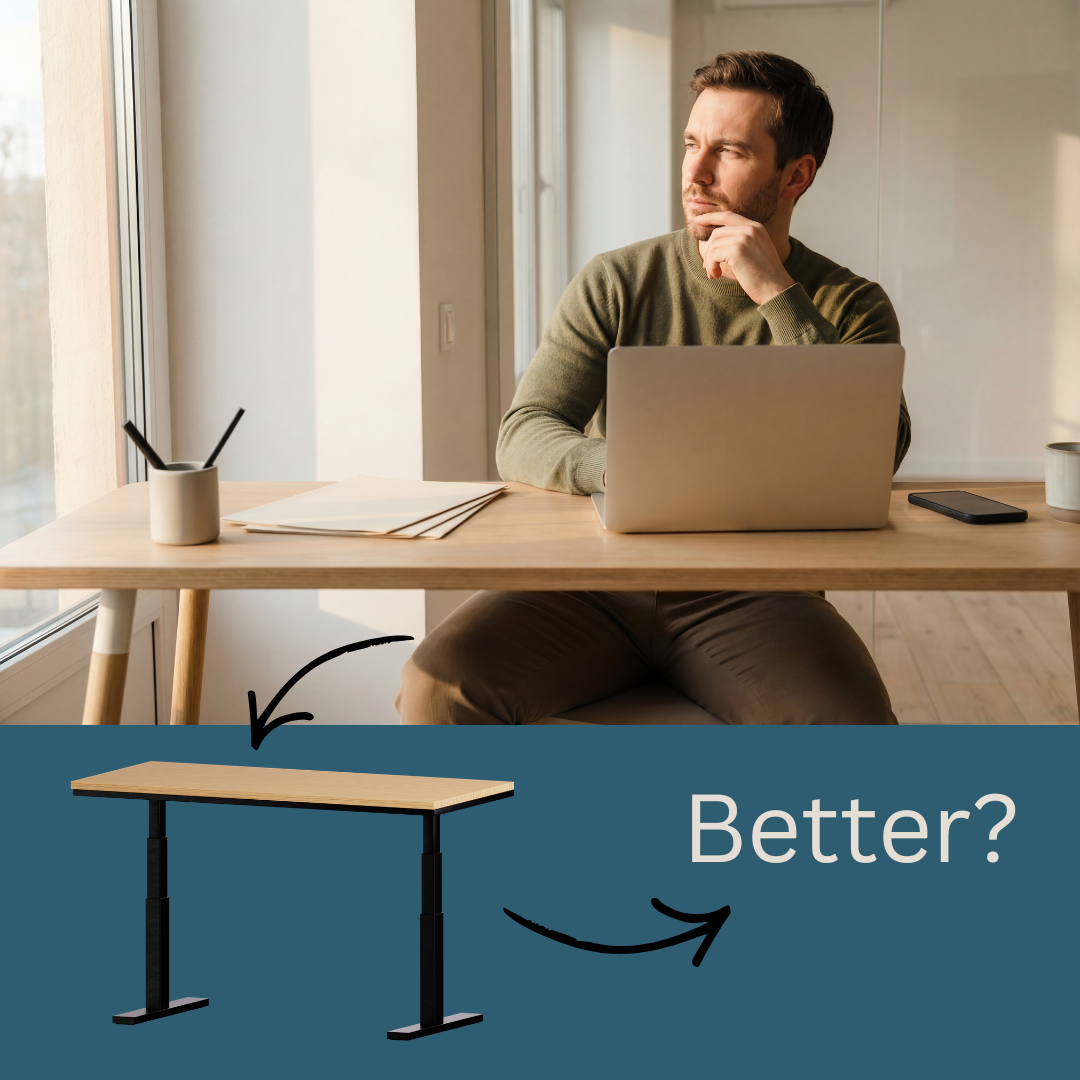
Do they actually help… or could they make things worse?
Introduction
Standing desks are often marketed as the solution to back pain.
And while they can help… they’re not the magic fix many people hope for.
In fact, I often see people feel worse after switching to a standing desk.
So if you’re thinking about investing in one, this guide will help you:
- Choose a desk that actually supports your body
- Avoid common mistakes that trigger pain
- Find the best options available in the UK right now
A quick physio truth (worth knowing first)
A standing desk doesn’t fix back pain.
What your back really needs is:
- Movement
- Strength
- Variety in positions

A desk can support those things – but it won’t replace them.
👉 If your back is already sore, standing still for hours can actually increase discomfort.
That’s why choosing the right desk (and using it well) matters.
My Top Standing Desk Picks (Quick Guide)
If you don’t want to scroll, here are some solid options:
Best overall:
👉 Desktronic HomeOne Electric Standing Desk (reliable, smooth, great size) (£399)
Best budget option:
👉 ErGear Electric Standing Desk (excellent value for money) (£109)
Best for small spaces:
👉 SANODESK QS+ Compact Electric Desk (£79)
Best converter (no full desk needed):
👉 BONTEC Standing Desk Converter (£67)
Best manual option:
👉 Yo-Yo Desk (well-built and durable) (£249)
What to Look for in a Standing Desk (for Back Pain)
1. Height Adjustability (non-negotiable)
This is the most important feature.
Your desk should allow:
- Elbows at ~90 degrees
- Screen at eye level
- Shoulders relaxed
Best options:
Electric desks (easiest to use):
- Desktronic HomeOne Standing Desk – approx £399
- ErGear Electric Standing Desk – approx £109
- SANODESK QS+ Electric Desk – approx £79
✔ Smooth
✔ Easy to adjust
✔ More likely you’ll actually use the standing feature
Manual / crank desks:
- Yo-Yo Desk – approx £270
- VIVO Desk Converter – approx £120
- iSunirm Height Adjustable Standing Desk – approx £60
✔ Cheaper
– But people tend to adjust them less often
Converters (great low-cost option):
- BONTEC Desk Converter – approx £67
- VIVO Desk Riser – approx £120
✔ Ideal if you don’t want to replace your whole desk
✔ Perfect for testing if standing works for you
2. Stability (massively underrated)
A wobbly desk =
– more tension
– more muscle fatigue
– more irritation for your back
Look for:
- Solid frame
- Good reviews mentioning stability
- Dual motor systems (for electric desks)
3. Desk Size & Setup
Make sure your desk:
- Fits your screen(s) comfortably
- Allows proper keyboard positioning
- Doesn’t force you into awkward postures
👉 If you’re cramped, your posture will suffer – sitting or standing.
4. Weight Capacity
Especially important if you use:
- Multiple monitors
- Heavier equipment
Electric desks usually handle more weight safely.
Are Standing Desks Actually Good for Back Pain?
Here’s the honest answer:
👉 They can help – but only if used properly.
What helps:
- Alternating between sitting and standing
- Changing position regularly
- Keeping good alignment
What doesn’t help:
- Standing all day
- Locking your knees
- Holding the same posture for hours
👉 I often see people swap one problem (too much sitting)…
for another (too much standing).
Common Standing Desk Mistakes (That Trigger Pain)
1. Standing too long
Start with:
👉 20–30 minutes at a time
Build up gradually.
2. Not moving enough
Even with a standing desk:
👉 you still need to shift, move, and reset
3. Poor screen height
Too low = rounding
Too high = neck strain
4. Ignoring underlying weakness
This is the big one.
If your:
- core
- hips
- back muscles
aren’t doing their job…
👉 no desk will fix that.
Accessories That Make a Big Difference
Anti-fatigue mat
→ reduces pressure through feet, knees, and back
Monitor arm
→ helps get screen to the right height
Standing stool
→ great for “in-between” support
What Actually Helps Back Pain Long-Term
This is where I’d focus first (before spending hundreds on a desk):
- Improving movement quality
- Building strength in the right areas
- Understanding what triggers your pain
👉 A desk supports your environment
👉 But your body still needs to do the work
Final Thoughts
A standing desk can be a helpful tool
but it’s not the solution on its own.
If you choose one:
- Go for adjustability and stability
- Use it gradually
- Keep moving throughout the day
And most importantly…
👉 Don’t ignore the root cause of your back pain.
Take care, Helen
Helen Manders BSc (Hons) MCSP HCPC
Chartered Physiotherapist Since 2001
Want help with your posture and back pain?
If you’re not sure whether your posture, strength, or daily habits are helping or aggravating your back…
My Free Posture Masterclass is a great place to start.
It’ll help you:
- Understand what your body actually needs
- Improve how you stand and move
- Feel more comfortable day-to-day
Affiliate Disclaimer
Just so you know: If you choose to make a purchase, I may earn a small commission – at no extra cost to you. It helps support the work I do to help people feel better, move better, and stay active. Thank you!